The next two days we spent on morning and afternoon game drives in Bandhavgarh National Park. It is a small national park, but has the highest density of tigers in India, as well as the largest breeding population of leopards. The park is also home to wild boar and jackal and at the centre of the park, high on the cliffs, sits an ancient fort which is home to a wide array of birds of prey including vultures and eagles.
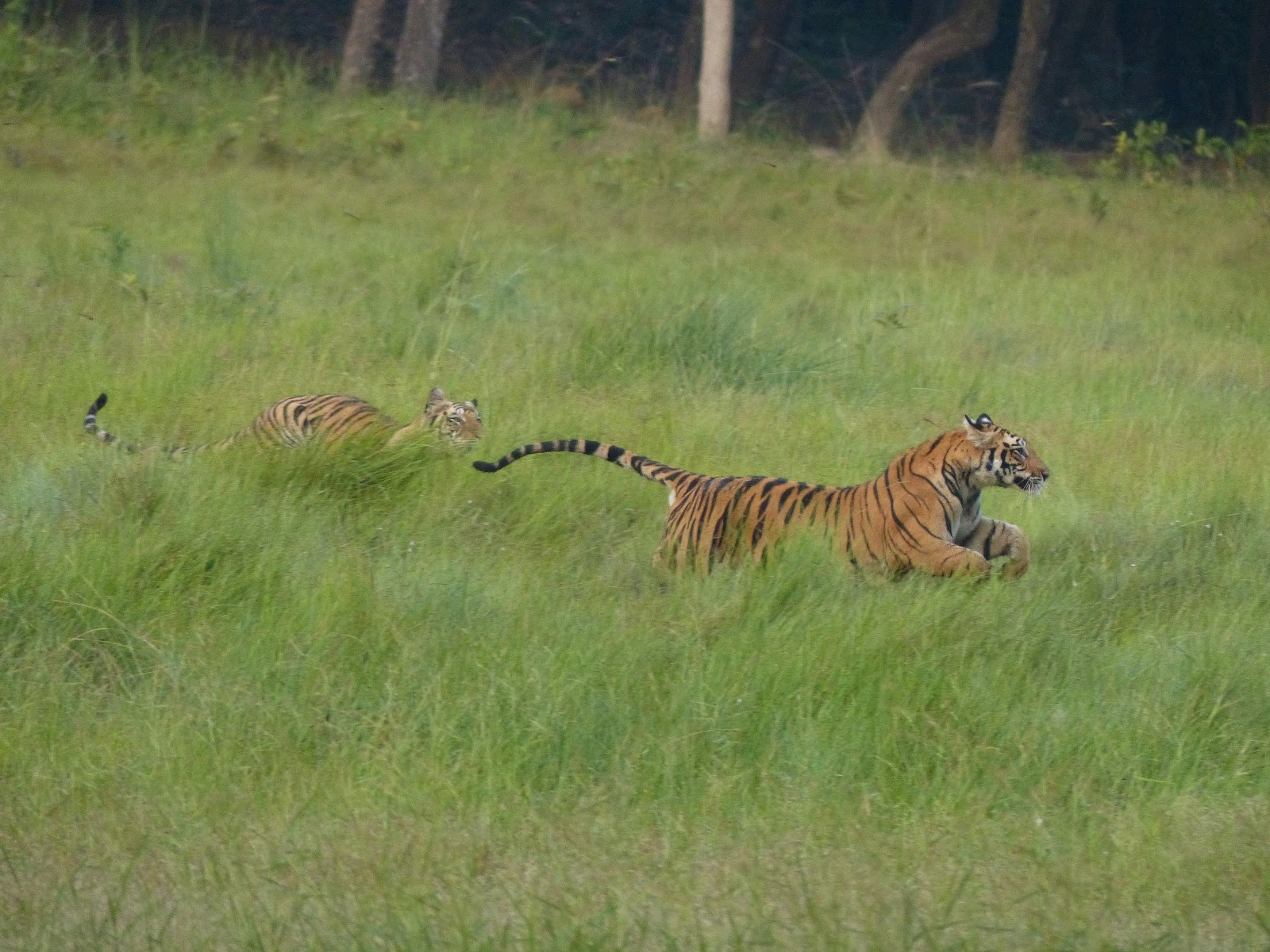
The morning drives are quite chilly at the beginning, and we were glad we brought our fleeces. The temperature soon rises as the day progresses. We see many buck, plenty of birds, elephants but it was only towards the end of the drive that our guide received a signal that three tigers had been seen off another track. Holding onto our hats we drove rally style to the spot and there they were. Two cubs, about 15 months old playing in the long grass, Mum had wandered off, but they were quite happy still play fighting with each other. They are glorious creatures and it was such a privilege to see them in their natural environment.


The second sighting was on the final morning when we saw the female cub close to near the road. The park rangers were there on elephant back and when they got too close to her the roar was a mighty one, glad it wasn’t Mum so close to us.
The morning drives are quite chilly at the beginning, and we were glad we brought our fleeces. The temperature soon rises as the day progresses. We see many buck, plenty of birds, elephants but it was only towards the end of the drive that our guide received a signal that three tigers had been seen off another track. Holding onto our hats we drove rally style to the spot and there they were. Two cubs, about 15 months old playing in the long grass, Mum had wandered off, but they were quite happy still play fighting with each other. They are glorious creatures and it was such a privilege to see them in their natural environment.


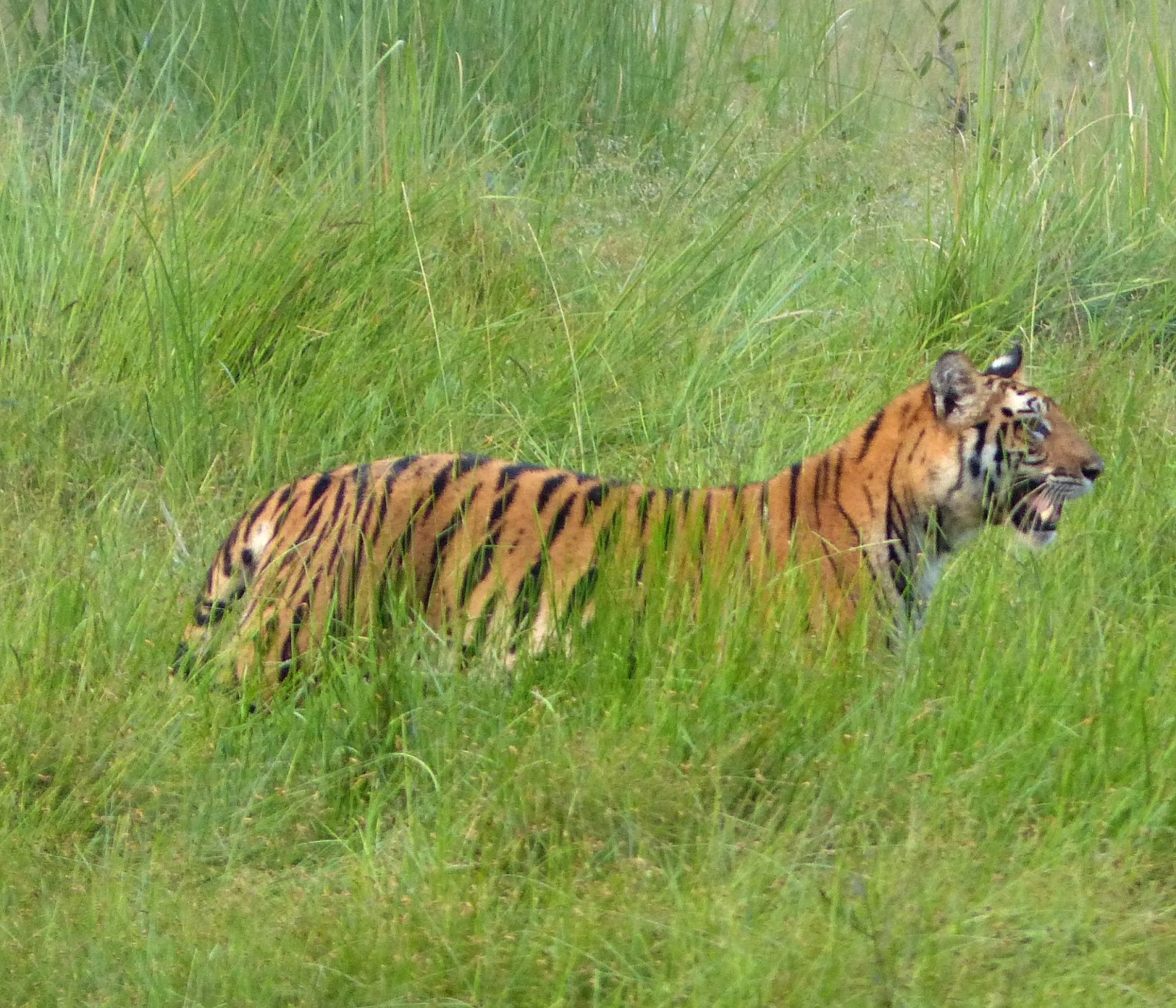




The second sighting was on the final morning when we saw the female cub close to near the road. The park rangers were there on elephant back and when they got too close to her the roar was a mighty one, glad it wasn’t Mum so close to us.


